Storage journal / 22 October 2026
Fitted or freestanding furniture? How to choose for your home
When made-to-measure fitted storage is worth it, when a freestanding piece is the smarter buy, and what to check before you commit – a practical guide for Isle of Man homes.
Start an estimate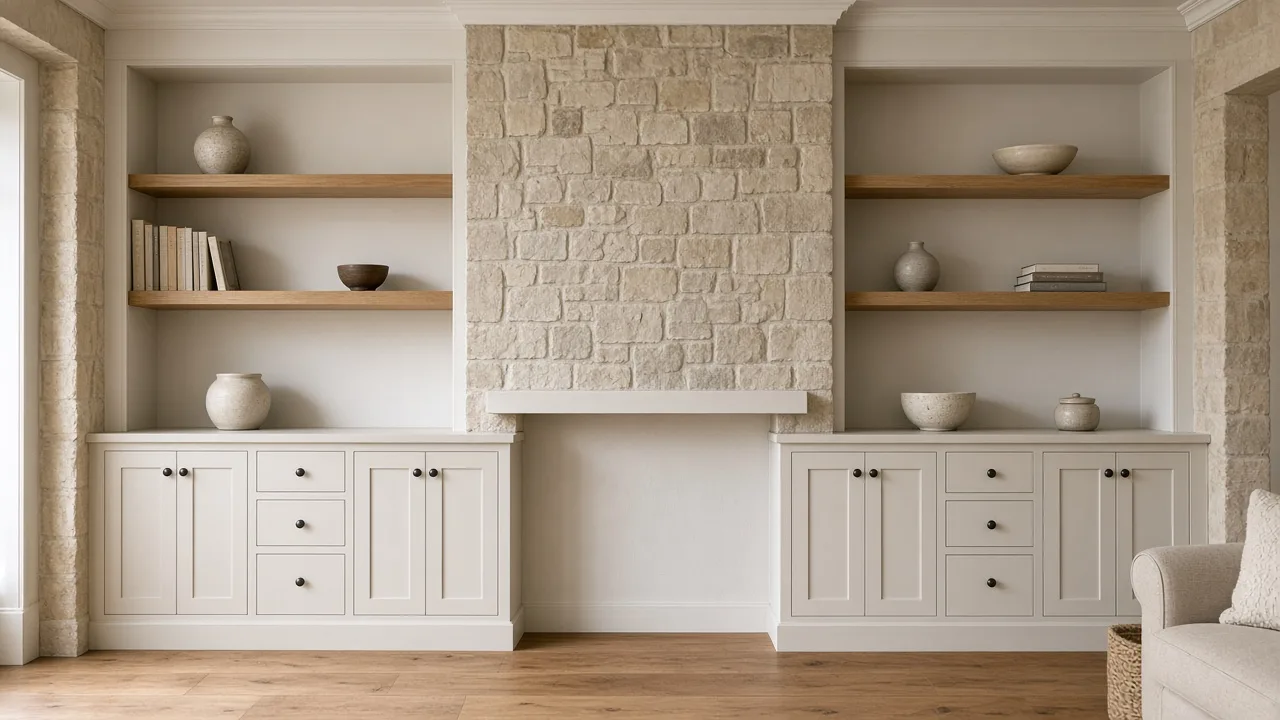
Fitted furniture is worth it when the space is awkward, when you plan to stay in the house for years, and when you want storage that uses the full height and width of a wall. Freestanding furniture is the better buy if you rent, expect to move soon, or need something quickly on a tight budget. Plenty of homes end up with both, and that is usually the sensible answer.
What "fitted" really means
A fitted piece is built for one wall and one room. It runs up to the ceiling, is scribed to the walls so there are no gaps where they lean or bow, and sits on a plinth so it looks like part of the house rather than something placed in it. The director of one fitted furniture company, speaking to Which?, put it simply: trim, scribing and plinth work are what make a wardrobe look truly fitted (Which?, How to plan and buy fitted wardrobes, Aug 2026).
Freestanding furniture is designed to stand anywhere. It is made in standard sizes, which keeps the price down and means you can take it with you, but it rarely lines up with an old wall, a sloping ceiling or a chimney breast.
There is also a middle route: modular flat-pack units fitted in place with filler panels. Which? notes that this DIY approach is cheaper but won't be as customisable or give as much storage as a professional made-to-measure service (Which?).
Where fitted furniture earns its keep
The case for fitted storage is strongest in the spaces standard furniture can't use well:
If your room is a plain rectangle with plenty of floor space, the gain from going fitted is smaller, and a good freestanding piece may do the job.
- Alcoves either side of a chimney breast. A freestanding bookcase leaves dead space on both sides and above. Made-to-measure alcove shelving can fill the recess from floor to ceiling, with cupboards below and shelves above.
- Sloping ceilings and dormers. Which? singles out small rooms and awkward alcoves, such as those under sloping ceilings, as the places where fitted wardrobes are most effective.
- Under the stairs. The void is a wedge shape that no catalogue piece matches, which is why drawers and cupboards built to the exact slope get far more out of it.
- Long bedroom walls. A run of fitted wardrobes can take the whole wall, so you get hanging, shelves and drawers in one footprint instead of several pieces with gaps between.
When freestanding is the smarter choice
Freestanding furniture wins on flexibility. It suits you if:
- You rent. Anything fixed to the walls needs your landlord's agreement, and it stays behind when you leave.
- You may move within a few years. Fitted furniture belongs to the house. Estate agents interviewed by Which? were split: one said fitted wardrobes don't necessarily add value, while another said they are often worth adding, especially in smaller rooms. The useful takeaway is to fit them because they make the house better to live in, not as an investment for a quick sale.
- You like to rearrange. A freestanding chest of drawers can move rooms when a nursery becomes a study.
- You need it next week. Made-to-measure work involves a survey, design and making time.
What drives the cost of fitted furniture
There is no single price for fitted work, because each piece is designed for its space. The main things that move the figure are:
Our pricing page shows guide prices by product, and every quote becomes a fixed written price after the home visit. Whoever you use, Which? advises adding 10 to 15 per cent to your budget as a contingency in case something goes wrong (Which?).
It is also worth being honest about DIY. A product manager quoted by Which? warned that the saving from building it yourself shrinks quickly once you count wasted materials, tools and your own time.
- Size and complexity. Height, width, slopes, corners and the number of doors and drawers all matter.
- Internal fittings. Drawers, pull-outs and lighting cost more than plain shelves and a rail.
- Finish. Painted, sprayed and veneered finishes are priced differently.
- Awkward bits. Pipes, meters, sockets and radiators that have to be worked around add design and fitting time.
Damp, older walls and where to put things
If your home is an older property with solid outside walls, that affects where storage should go. Which? says fitted wardrobes don't cause damp themselves, but poor fitting or a humid room can lead to it. The two culprits are condensation and poor air circulation. Its advice is to choose a suitable location, such as an internal wall, and possibly leave a space between the wall and the back of the unit. A dehumidifier and opening windows and wardrobe doors also help (Which?).
Freestanding furniture pushed tight against a cold outside wall can have the same problem, so the rule applies either way: give the back some air.
Safety: tall freestanding pieces need fixing
A fitted unit is fixed to the structure by design. A tall freestanding bookcase or chest of drawers isn't, and it can tip if a child climbs it. Lancashire County Council's home safety guidance points out that children often use open drawers like a ladder, and advises that furniture should be attached, mounted or bolted to walls, with heavy items kept off top shelves (Lancashire County Council, Injuries from unsecured furniture falling). IKEA's own Secure it! guidance likewise says furniture must be attached to the wall using fixings suited to the wall material (IKEA UK).
So if you choose freestanding for a family home, budget for proper anti-tip fixings and use plugs suited to your walls.
Before you commit: practical checks
Whichever way you go, a few checks save headaches:
If you want to see what our survey-to-fitting route looks like, our process sets out each step.
- Measure in more than one place. Which? recommends measuring width and height in three different spots, because walls are rarely true.
- Note what can't move. Sockets, switches and radiators are easy to overlook until fitting day.
- Sort the flooring first. A carpet fitter quoted by Which? said the most common mistake is fitting wardrobes on top of old carpet in an undecorated room.
- Plan from the inside out. List what you actually need to store (long coats, shoes, folded jumpers, the vacuum) before choosing doors and finishes.
- Get it in writing. The Isle of Man Government's home improvement advice says that for anything beyond a very minor job you should ask for written details of the work and the price, including start and planned finish dates. It also advises getting a receipt for every payment and, where possible, paying by credit card for the extra protection (gov.im, Home improvement advice).
Useful next routes
Frequently asked questions
Does fitted furniture add value to a house?
Opinions differ. Estate agents interviewed by Which? ranged from "don't necessarily add value" to "often worth adding", particularly in small rooms. It is safest to treat fitted storage as something that makes the home better to live in rather than as a sure-fire return.
Can I take fitted furniture with me when I move?
Generally no. It is built and scribed to one room, so it stays with the house. If you expect to move soon, freestanding pieces are more portable.
Can fitted wardrobes cause damp?
Not on their own. Which? says problems come from condensation and poor air circulation. Placing units on internal walls where possible, leaving a gap behind and ventilating the room all help.
Is fitted flat-pack the same as bespoke?
Not quite. Modular units fitted with filler panels can look built-in, but Which? notes they won't be as customisable or give as much storage as a made-to-measure service.
Next step
Weighing up fitted storage for an awkward space?
Start an estimate with a few photos and rough measurements. Every quote becomes a fixed written price after the home visit.
Start an estimate