Storage journal / 27 June 2026
Home office storage ideas for Isle of Man box rooms.
A spare bedroom or box room can become a calm working space, but only if the desk, shelves, cables and closed storage are planned around the room rather than squeezed into it.
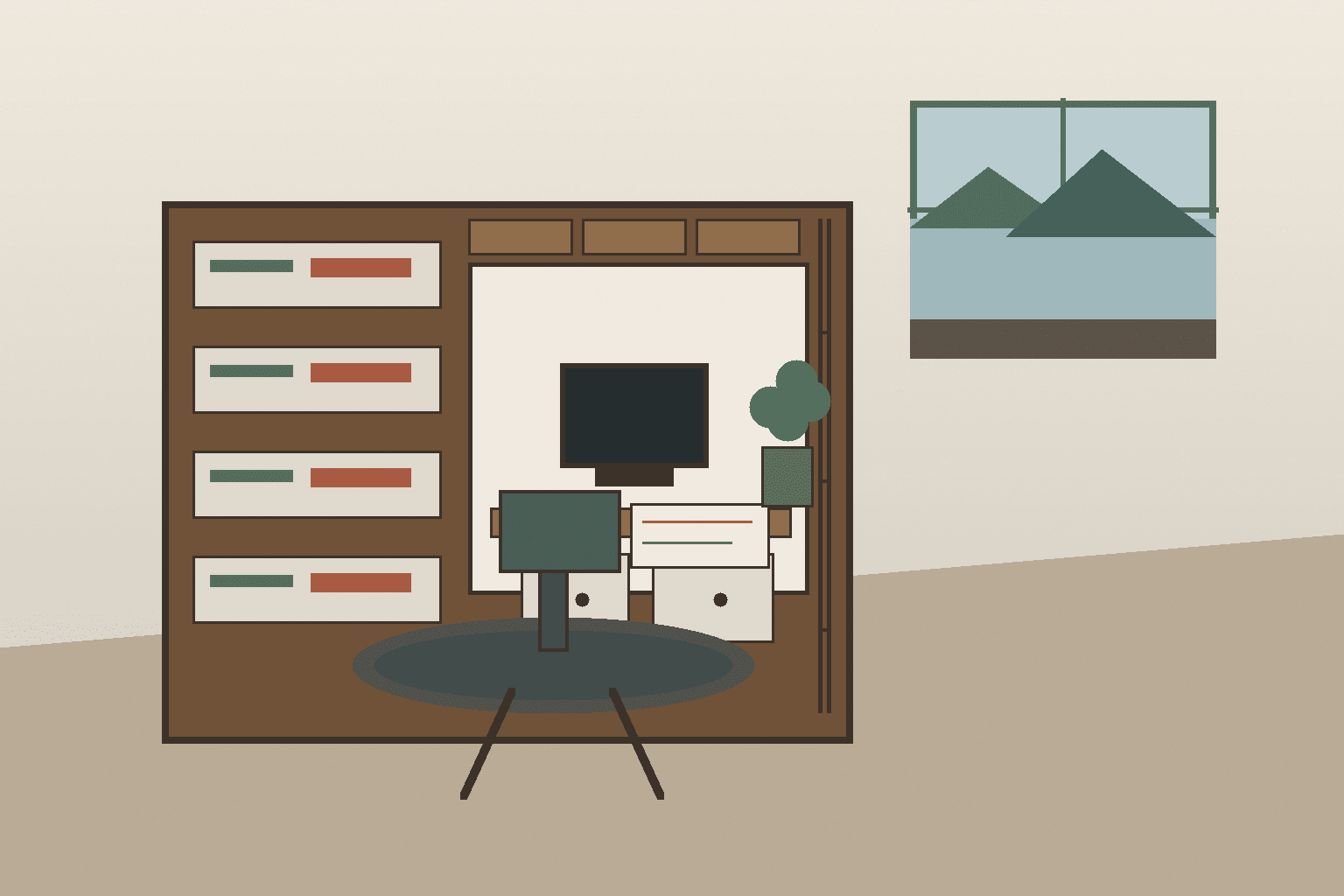
Short answer: give the room one clear job, then build storage around it.
A small home office works best when the desk position, chair movement and storage needs are decided before the cupboard fronts. In a terrace, cottage or newer family home, the same rule applies: the room has to work at 9am on a wet Monday, not just look tidy in a photograph.
Fitted joinery helps when the room is too narrow for a standard desk, the walls are uneven, or the storage needs to hold work kit, printer paper, files and household overflow without turning the office into a dumping ground.
What should a box-room office include?
- A desk sized for the work: laptop use, a monitor, drawing work and paperwork all need different depths.
- Closed cupboards: useful for files, printer supplies, stationery, camera gear and the everyday clutter that makes video calls look chaotic.
- Shallow shelves: good above the desk when they hold books and baskets without crowding the headspace.
- Cable routes: chargers, docks, routers and lamps need accessible routes instead of a tangled socket corner.
- Future flexibility: a spare bedroom may need to stay capable of holding a guest bed, ironing board or hobby storage later.
Best layouts for small Manx home offices.
A wall-to-wall desk can be strong in a narrow box room because it avoids wasted gaps at each side. Add drawers below one side, a printer cupboard below the other and shelves above only where they do not make the seat feel boxed in.
In a landing nook or alcove, a compact fitted desk with tall storage beside it may work better than a full office run. The tall section can hide paperwork, router equipment and household spares while the desk remains visually light.
If the room has a sloping ceiling, use the low side for drawers or shelves and keep the full-height area for seated clearance, tall cupboards or a wardrobe-style storage bay.
Measure these before asking for a quote.
- Room width, depth and ceiling height, including any low eaves or boxing.
- Door swing, window board depth, radiator position and skirting projection.
- Socket locations, internet equipment, phone points and cable entry points.
- Screen size, chair width and whether the chair must tuck fully under the desk.
- Printer, shredder, files, books and work equipment that need a real compartment.
- Whether the room must still work as a guest room, dressing room or storage room.
Where fitted storage beats freestanding furniture.
Freestanding furniture is usually fine when the room is temporary or the work setup is light. Fitted storage earns its keep when every centimetre matters, when wall-to-wall use avoids awkward dead gaps, or when the office has to hide non-office storage cleanly.
It is also useful when the finish needs to sit comfortably with nearby wardrobes, bookcases or cupboards. A small office often sits beside a bedroom or hallway, so the outside view matters as much as the desktop.
Useful next steps on this site.
- Start with the home office nooks product page for fitted desk and storage options.
- Use the home office configurator to send rough dimensions and notes about sockets, equipment and chair space.
- Compare bookcases, shelving and cupboards if the room is more library than workstation.
- Check the pricing guide for how size, finish, hardware and fitting affect the guide range.
- Browse the gallery for painted finishes, shelf proportions and cupboard-front references.
- Use contact if you already have photos of the room, socket positions and work equipment ready.
Home office storage FAQs
What is the best storage for a small home office?
The best small home office storage usually combines a properly sized desk, shallow wall shelves, closed cupboards for visual clutter and a cable route that keeps chargers and router equipment accessible.
Can a box room become a fitted office?
Often, yes. A measured design can work around door swing, skirting, sloping ceilings, sockets, radiators and shallow walls so the room still feels usable rather than filled with freestanding furniture.
How deep should a fitted home office desk be?
A laptop-only desk can often work from around 500mm deep, while a monitor, keyboard and paperwork are more comfortable with extra depth. The right answer depends on chair clearance, screen size and how the room is entered.
Quote readiness
Turn the spare room into a proper work brief.
Send rough dimensions, photos of each wall and a short list of the equipment that needs to live in the office. The first design pass should solve desk depth, chair clearance, cable access and storage split before choosing the final door style.
Start a home office estimate