Isle of Man fitted storage guide

Alcove storage ideas for older Manx homes.

The best alcove storage is planned around the room first: uneven chimney breast walls, thick skirting, sockets, cables, books, toys and the things you want hidden all shape the final shelves and cupboards.

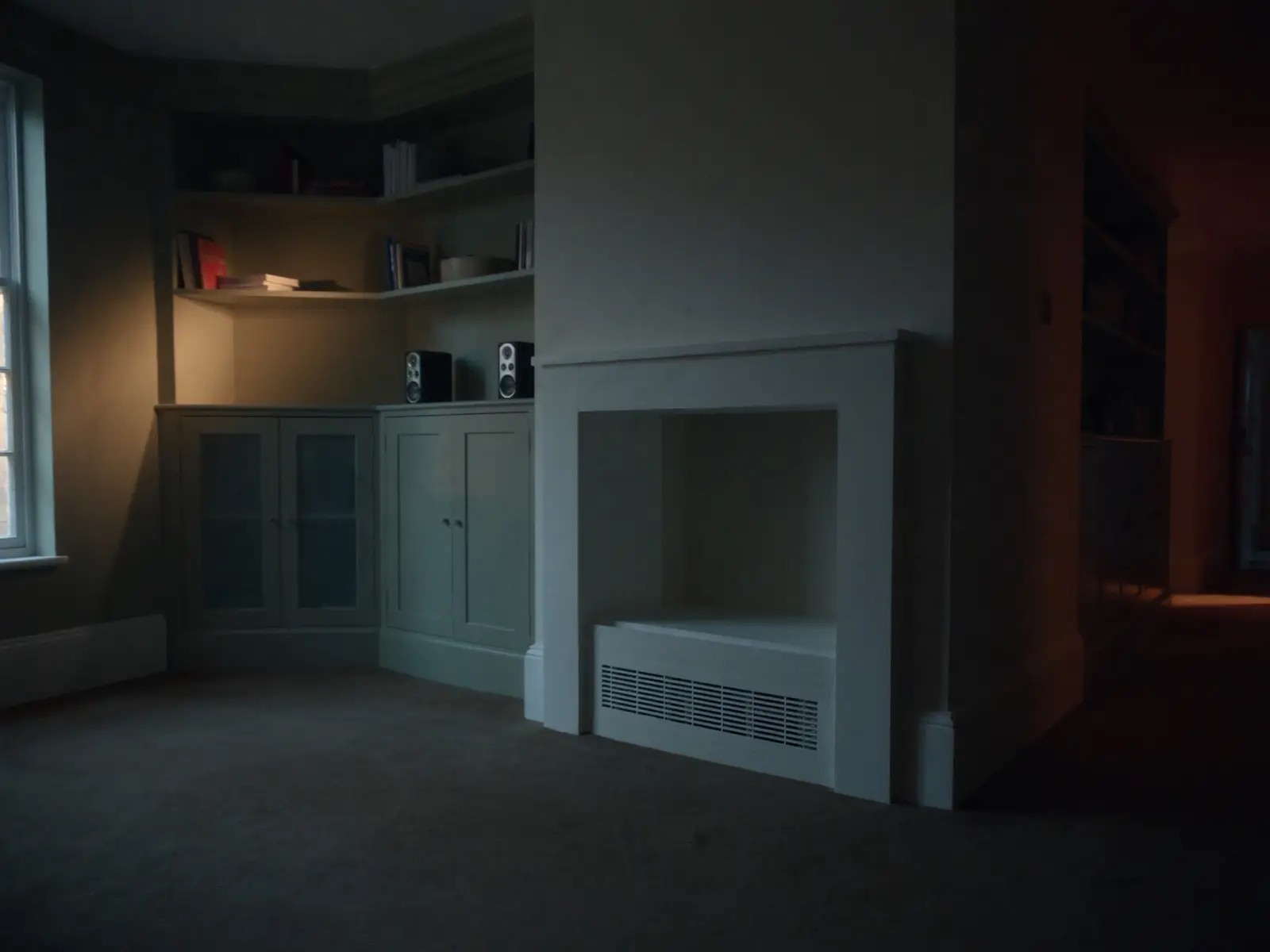
Finished chimney alcoves for a Manx home, with painted shelves and cupboards either side of the fireplace.

Direct answer

Start with closed storage below, then tune the shelves to the room.

For most older Isle of Man homes, the safest alcove layout is a fitted base cupboard with open shelves above. It handles the practical clutter while keeping the chimney-breast wall visually lighter. The quote becomes sharper when photos show wall returns, sockets, skirting, floor level and anything that needs access after fitting.

What is the best use of an alcove?

Most alcoves work best with closed cupboards below and open shelves above. The cupboards hide cables, toys, paperwork or living-room clutter; the shelves keep books and display items visible without making the room feel boxed in.
Why are older alcoves harder to quote?

Older Isle of Man homes often have uneven plaster, out-of-square chimney breasts, thick skirting, sockets, vents and floors that are not perfectly level. Those details affect scribing, filler pieces, door gaps and final fitting time.

What photos help with an alcove quote?

Send one wide photo of the whole wall, close-ups of sockets and skirting, a photo from each side showing the chimney breast return, and rough width, depth and height measurements for both alcoves.

Measurement checklist

The details that matter before a survey.

  • Measure each alcove separately; older chimney breasts are often not symmetrical.
  • Record width at the back wall and at the front edge, because walls can taper.
  • Measure depth on both sides, including the skirting and any pipe boxing.
  • Note socket, switch, TV cable, vent and radiator positions before choosing shelves or doors.
  • Photograph the floor line and skirting so plinths and filler details can be judged early.
  • Decide what has to fit inside: books, board games, records, router, toys, files, glassware or logs.
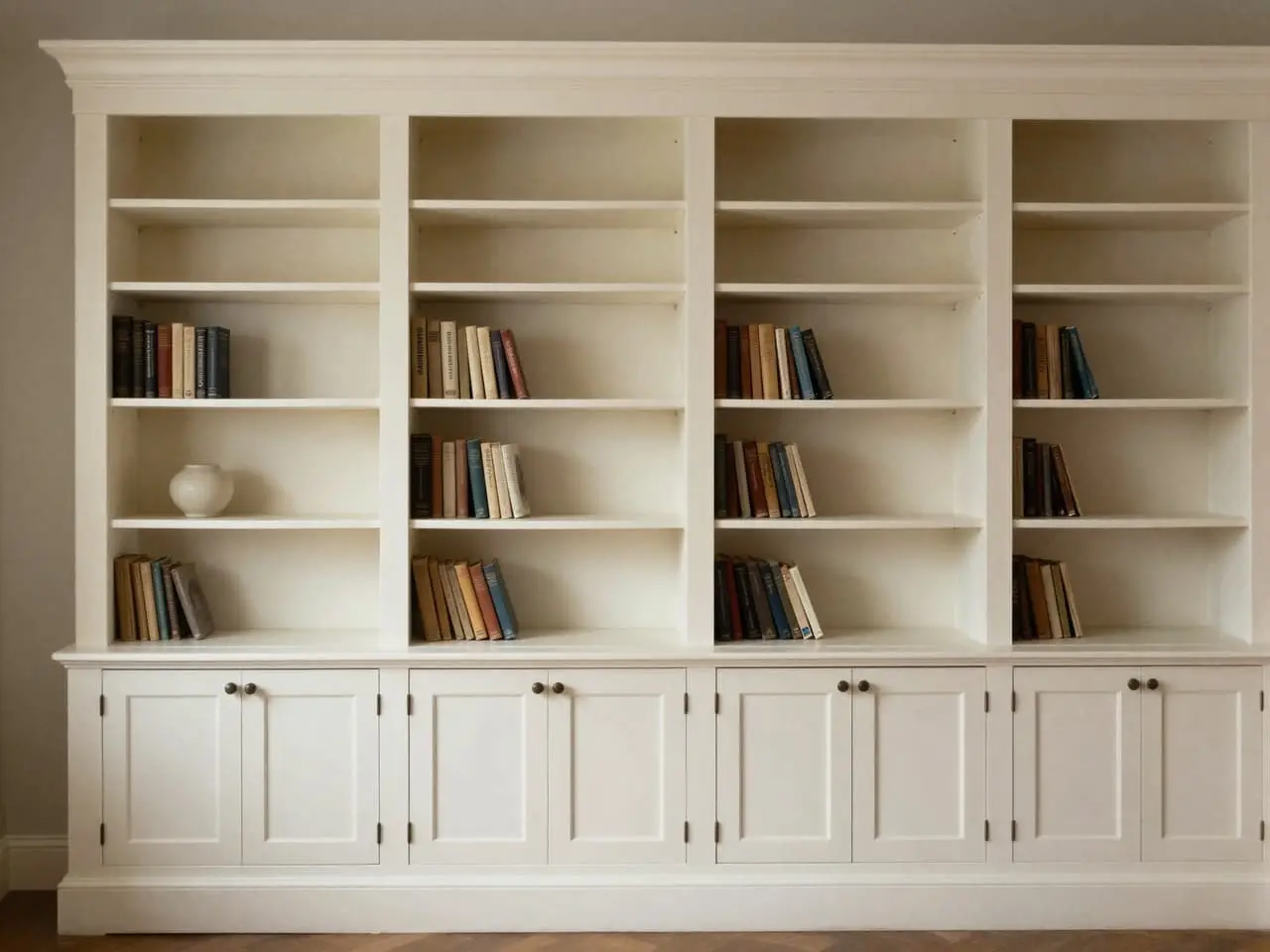
Illustration: wall-to-wall made-to-measure bookcase with base cupboards, tall open shelves and a wider central display bay.
Illustrative drawing. Bookcase-style storage can work when an alcove needs capacity, but depth and finish need care so the room does not feel crowded.

Layout decisions

Choose the storage type by what needs to live there.

Open shelves

Best for books, plants, ceramics and rooms where you want the wall to feel lighter.

They need styling discipline. If the alcove is for paperwork, toys or cables, add closed storage below.

Lower cupboards

Best for everyday clutter, media equipment, board games, router boxes and anything you do not want on show.

Door swings need clearance. In tight rooms, sliding, push-catch or fewer wider doors may work better.

Full-height bookcase

Best when the room genuinely needs storage volume and the contents will look good visible.

A full-height unit can make a small room feel heavy if the shelves are too deep or the finish is too dark.

Desk or media zone

Best when the alcove already has sockets and the room needs a work nook or clean TV-cable route.

Cable access, ventilation and future equipment changes need to be designed in, not added afterwards.

Room-by-room thinking

Four common alcove briefs.

Living-room chimney breast alcoves

Use lower cupboards for clutter and shelves above for books, lamps or display. Keep the two sides related, but they do not need to be identical if one side has sockets, a radiator or a door opening.

Dining-room display storage

Glassware, serving dishes and board games often need mixed storage. A deeper base cupboard with slimmer shelves above usually looks lighter than a full-height block of doors.

Small bedroom alcoves

Treat the alcove as useful secondary storage rather than a full wardrobe if the depth is tight. Shelves, drawers or a narrow cupboard can solve awkward corners without crowding the bed.

Home-office recesses

Plan sockets and cable routes first. A fitted desk, printer cupboard and adjustable shelves can turn a shallow recess into a proper work zone without stealing a whole room.

Common questions

Short answers before you send photos.

Do both alcoves beside a chimney breast have to match?

No. Matching finishes usually matter more than matching layouts. One side can be a cupboard and shelf run while the other becomes a desk, media cupboard or simpler bookcase if the room works better that way.

Can fitted alcove storage hide TV and router cables?

Yes, as long as cable routes, ventilation and access are planned before the unit is built. A photo of the sockets and existing cable entry points is more useful than a perfect measurement at enquiry stage.

Are floating shelves cheaper than fitted alcove cupboards?

Usually, but only when the walls are straightforward and the shelves do not need complex scribing. Lower cupboards, doors, drawers, sprayed finishes and awkward walls are the main cost drivers.

Ready to price the alcove?

Open the alcove designer, then attach the photos that show the uneven parts.

Use the configurator for a price, or read the pricing guide and storage planning kit first if you are still gathering room details.