Storage journal / 25 June 2026
Radiator cover ideas for Isle of Man homes.
A good radiator cover is not just a decorative box. It has to let heat move, keep valves reachable, work around pipework and still look like part of the room.
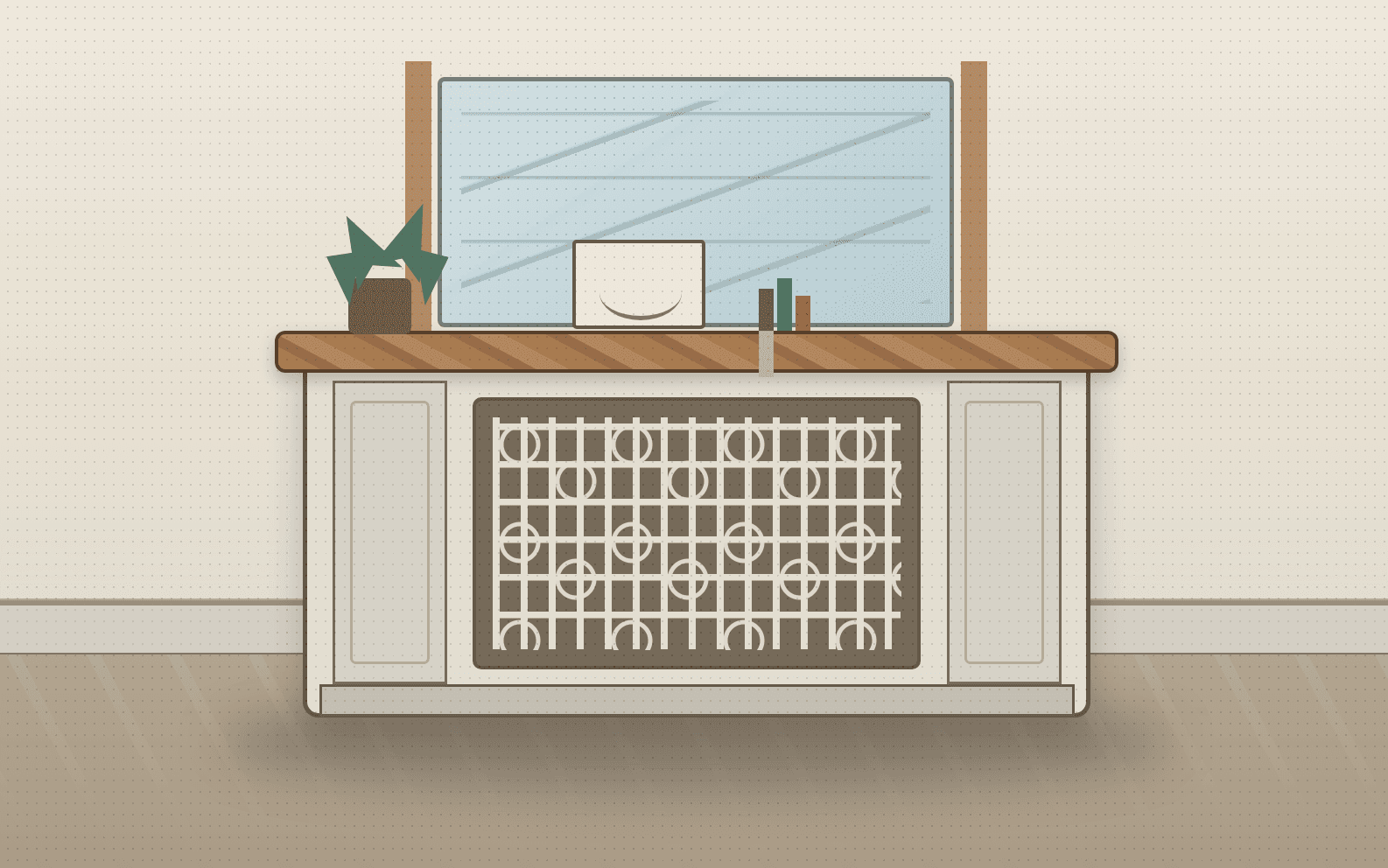
Short answer: plan airflow and access before the grille pattern.
The most important radiator-cover decisions are practical. Warm air needs to escape through the front and top, the valves need to stay reachable and the cover should be removable or serviceable enough for maintenance. Once those basics are right, the grille, trim and paint finish can do the visual work.
That is especially true in older Isle of Man homes where walls may be uneven, pipework may not run neatly and window boards can sit close above the radiator. A made-to-measure cover can be scribed to the room instead of leaving odd gaps around skirting, pipes and deep reveals.
Where radiator covers work best.
- Hallways: a cover can turn an exposed radiator into a narrow landing shelf for keys, post and small daily items.
- Living rooms: a grille-front cover can make the radiator feel closer to fitted furniture, especially near alcove cupboards or media storage.
- Bedrooms: a low cover can calm a visually busy wall, but it should not block curtains, sockets or furniture clearances.
- Under windows: the top can align with a window board, provided warm air still has a proper route out.
- Period-style rooms: fretwork panels, shaker side panels and simple mouldings can soften modern radiators without pretending they are antique features.
Airflow mistakes to avoid.
Avoid tiny grille openings, sealed top boxes and covers that sit hard against the radiator. Radiators work by moving warm air into the room; if the joinery traps that air, the cover has solved the visual problem and created a heating problem.
A practical cover usually needs a generous front grille, a clear top vent or open back, sensible clearance around the radiator and enough removable access to valves. If a room already struggles to heat up, the cover should be planned carefully rather than treated as a purely decorative job.
What to measure before asking for a quote.
- Radiator width, height and depth from the wall to the deepest point.
- Valve positions, pipe routes and whether either valve needs regular adjustment.
- Skirting-board height, projection and any uneven floor or wall edges.
- Distance to nearby sockets, curtains, doors, furniture and window boards.
- Whether the top should act as a small shelf or simply finish the cover cleanly.
- Preferred grille style, paint finish and whether it should match nearby fitted storage.
How to make a cover feel built in.
The simplest way is to repeat details already in the room: a shaker-style side panel, a grille pattern that echoes nearby fretwork, a painted finish that matches cupboards, or a top shelf that lines through with an alcove unit. Small trim decisions matter because a radiator cover often sits at eye level when you enter a hallway or living room.
If the room already has fitted cupboards, fretwork panels, wall panelling or alcove shelving, the radiator cover should be designed as part of that language rather than as a separate object.
Useful next steps on this site.
- Compare the service on the radiator covers product page.
- Use the radiator cover configurator to share rough dimensions and valve notes.
- Check finish and panel options before choosing a grille style.
- Review the pricing guide for how size, finish and hardware affect fitted-storage quotes.
- Browse the gallery for nearby joinery details that can inform the cover style.
Radiator cover FAQs
Do radiator covers reduce heat?
They can reduce heat if the grille is too closed, the top traps warm air or the radiator is boxed in tightly. A useful fitted cover needs generous front airflow, a clear route for warm air to rise and access to the valves.
What should I measure for a radiator cover quote?
Measure the radiator width, height, depth from the wall, valve positions, pipe runs, skirting height and any window-board or socket constraints. Add photos from straight on and both sides so the cover can be planned around the real wall.
Can radiator covers match other fitted storage?
Yes. Door style, grille pattern, paint finish, top shelf thickness and trim can be matched to nearby cupboards, alcove storage, wall panelling or hallway joinery so the cover feels intentional rather than added later.
Quote readiness
Turn the exposed radiator into a measured joinery brief.
Send rough dimensions, a straight-on photo and close-ups of the valves, pipes, skirting and window-board area. The first pass can stay practical: airflow, access, depth, top use and finish direction.
Start a radiator cover estimate