Storage journal / 19 June 2026
TV and media wall storage ideas for Isle of Man living rooms.
A good media wall does more than frame the television. It decides where the cables, router, speakers, consoles, books and everyday clutter go, then fits that plan around the real wall.
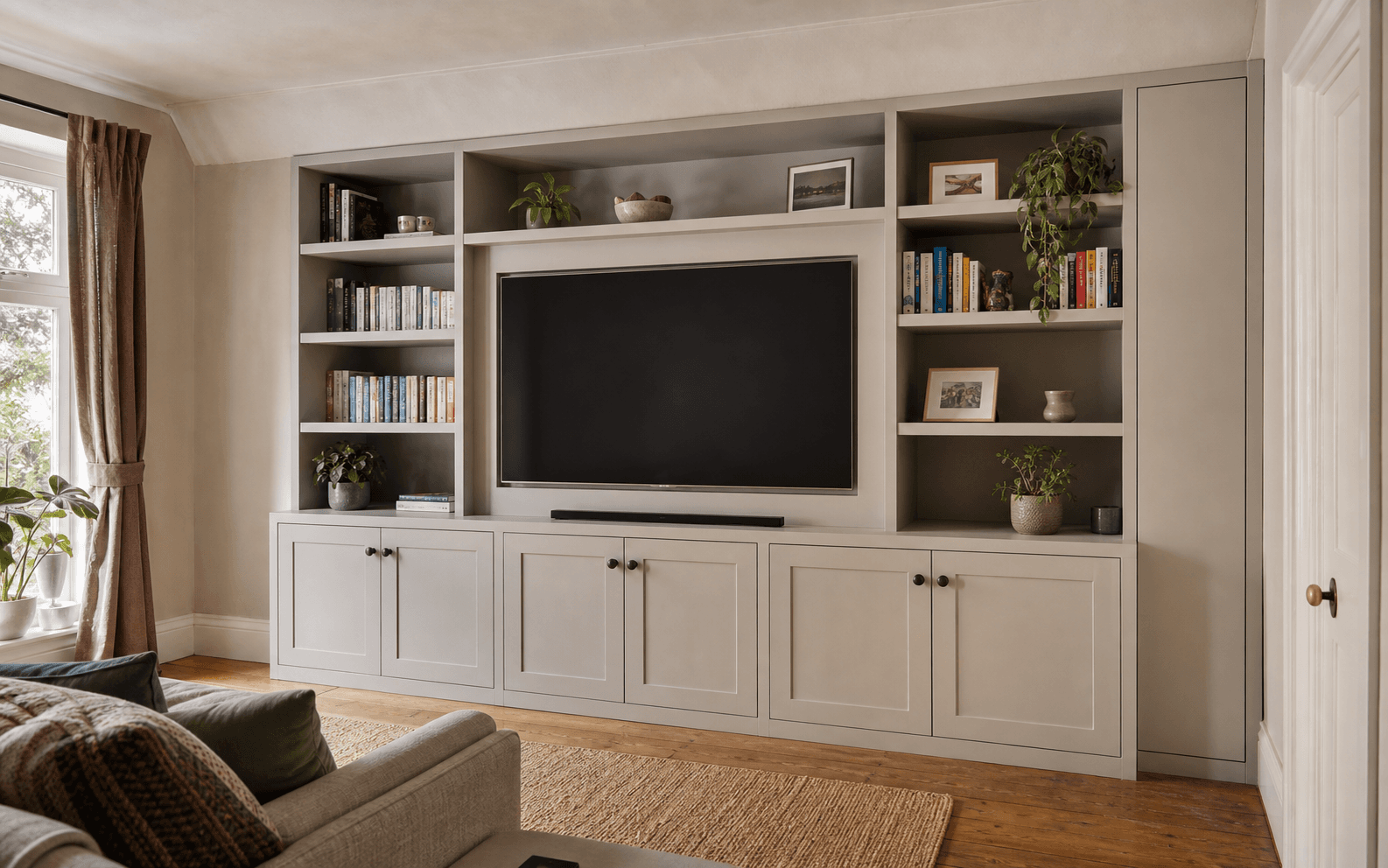
Short answer: plan the equipment first, then design the front.
The best TV storage starts with the items that need power, airflow and access. A wall of neat doors can look calm on day one, but it will not work if the router overheats, the soundbar has nowhere to sit, or the games console needs a door left open every evening.
For most Isle of Man living rooms, the practical starting point is a low fitted base with closed cupboards, a centred TV zone, one or two open display areas and a clear cable route back to the sockets. Taller side storage can be added if the room needs books, board games, records, toys or paperwork hidden away.
What makes a fitted media wall different from a TV stand?
A freestanding TV stand deals with the screen and maybe a console. Fitted media storage deals with the whole wall: sockets, skirting, alcoves, radiators, speaker positions, door swings and the line of sight from the sofa. It can also hide the odd gaps that appear when older plaster is not perfectly flat.
That matters in Manx cottages, Victorian terraces, new-build lounges and compact snugs for different reasons. The same flat-pack unit rarely suits all of them. A measured unit can be scribed to the wall, made shallower where traffic is tight and given removable panels where sockets or service points need to stay reachable.
Five media-wall layouts that work well.
- Low wall-to-wall cabinet: best when the room should stay visually quiet and the TV is already wall-mounted.
- TV recess with open shelves: useful for books, ceramics and photos, especially when the wall would otherwise feel blank.
- Closed side towers: good for toys, records, paperwork and less attractive electronics that need to disappear.
- Alcove media storage: strong beside a chimney breast, where one or both alcoves can hold equipment, books and display shelves.
- Mixed media and home-office wall: useful in small homes where the living room also needs a printer, files or a laptop landing space.
Cable management and ventilation are not optional details.
Before choosing door style, decide how cables will move between the TV, sockets, router, speakers and equipment shelves. Good fitted storage normally needs cable ports, a route behind or through the carcass and enough removable access to change a device later without dismantling the unit.
Ventilation is just as important. Consoles, amplifiers, routers and set-top boxes should not be sealed into tiny boxes. Slotted backs, open shelf zones, grille details or discreet gaps can keep equipment usable while preserving a clean fitted look.
What to measure before asking for a quote.
- Wall width, ceiling height and the maximum depth the room can spare.
- TV size, current viewing height and whether the screen is wall-mounted or standing.
- Socket, aerial, ethernet and router positions.
- Speaker, soundbar, console, record player or amplifier dimensions.
- Radiators, vents, doors, windows, skirting, picture rails and any chimney-breast returns.
- What needs hiding: toys, paperwork, remotes, chargers, cables, books, games or cleaning kit.
Useful next steps on this site.
- Compare the fitted media-storage service on the TV units product page.
- Use the TV unit configurator to share rough dimensions, layout and equipment notes.
- Check the pricing guide before deciding between a simple base run and a full wall installation.
- Browse gallery inspiration for proportions, shelving rhythm and finish direction.
- Use the contact route if you already have photos and measurements ready.
TV and media storage FAQs
What should a fitted TV unit include?
A useful fitted TV unit normally includes a safe screen position, closed cupboards for equipment, open shelves for display, cable routes, ventilation gaps and access panels so routers, consoles and sockets can still be reached.
Can a media wall work in an older Isle of Man home?
Yes, but it should be measured around the real wall. Older homes often have uneven plaster, chimney returns, deep skirting, picture rails or off-centre sockets, so scribed fillers and service access matter more than a catalogue-style layout.
How do I prepare for a media wall quote?
Measure the wall width, ceiling height, TV size, socket positions and rough depth available. Send photos from both room corners and list the equipment that needs to fit inside, such as router, soundbar, games console, speakers or record player.
Quote readiness
Turn the screen wall into a measured storage brief.
Send rough dimensions, a photo from each room corner and a list of the equipment that needs to live in the unit. The first pass can stay practical: screen position, cable route, storage split and finish direction.
Start a TV unit estimate